 RankinGG
RANKINGG | IN FOCUS
BEYOND THE BAN — ISSUE 01
Reference date: November 21, 2026
Reader note: Riftbound rules terms and card names follow the official English-language product. “Calm” refers to the Calm domain, and Constructed 2v2 refers to the official team constructed format.
A three-Might unit, a simple effect, and a difficult question: how far can a card correct a strategy's weaknesses without harming the balance of the game?
A SEEMINGLY HARMLESS CARD
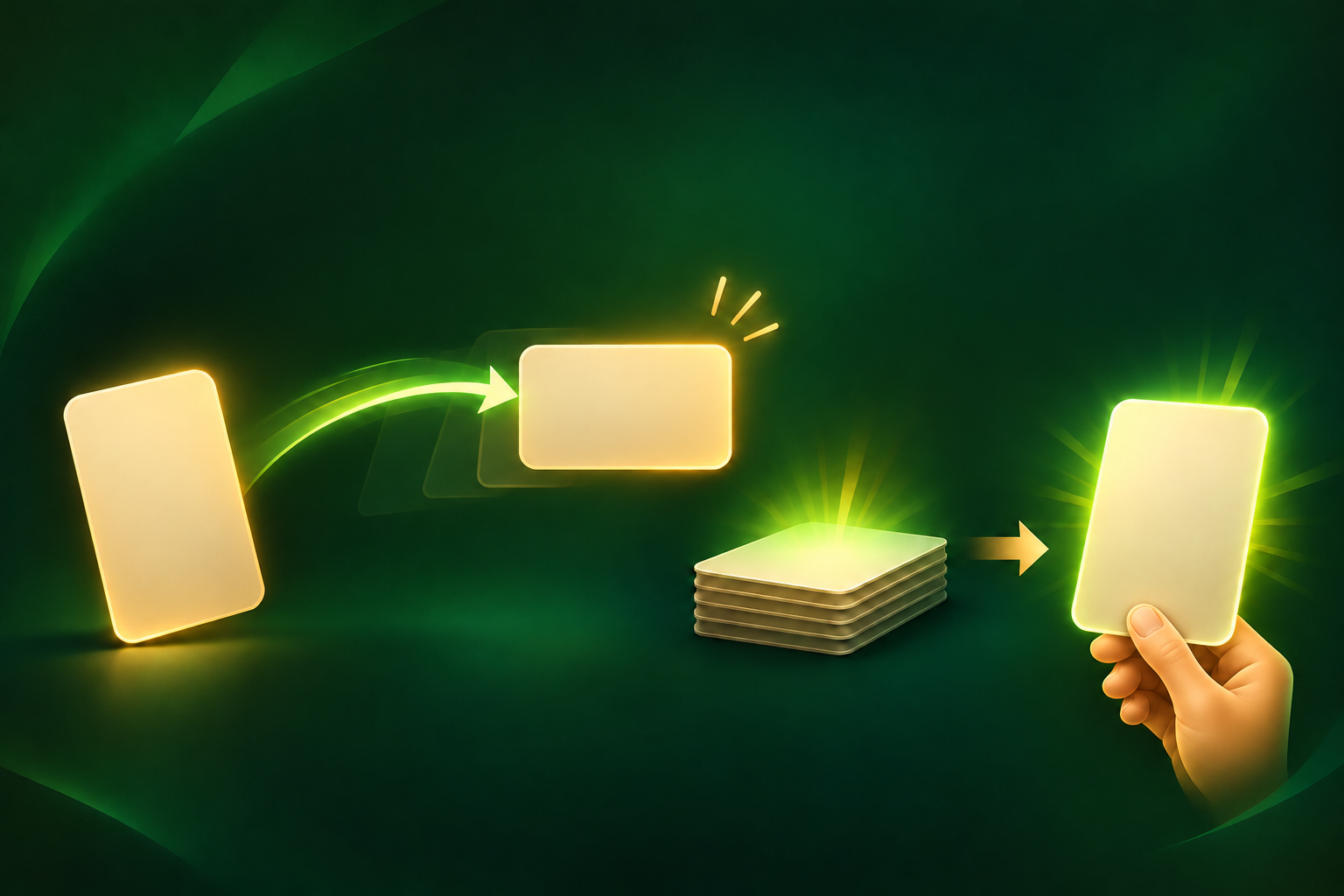
In Riftbound, players must conquer battlefields, position units, and carefully manage the cards in hand. Stellacorn Herder rewards its controller with a new card whenever it moves.
The unit was released in Spiritforged and became an important tool for several Calm-domain decks. On November 13, 2026, Riot Games announced that it would be banned from Standard and Constructed 2v2 from November 23. The update affected eight cards and two battlefields.
WHAT DOES STELLACORN HERDER DO?
Stellacorn Herder is a four-energy Calm unit with three Might. Its text says: “When I move, draw 1.” There is no once-per-turn restriction. If it moves several times while following the rules, it can generate several draws.
WHY DOES CARD DRAW MATTER?
A hand represents options. An extra card can provide a unit, an answer, a movement tool, or another way to contest a battlefield. Stellacorn turns a desirable action—moving a unit—into a repeatable source of resources.
Movement is not necessarily free. It may require actions, energy, cards, or specific conditions. The balance question is therefore not only how many cards Stellacorn draws, but what the player must give up to receive them.
WHY DID RIOT BAN IT?
Riot's explanation raises three central concerns.
1. A reward without an activation limit
Riot considered repeated rewards for movement too powerful without a draw limit and stated that it would not design the card that way today. This is a concern about the card's design, not only a particular combo.
2. Its interaction with Riven
According to Riot, Stellacorn could immediately repay its card investment when entering a battlefield, leaving few opportunities to respond. Removing it afterward might not undo the value it had already generated.
3. Overcorrecting a Calm weakness
Riot acknowledged that the unit supplied card draw needed by several Calm decks, but concluded that it compensated too efficiently for a natural weakness of the domain.
OFFICIAL SOURCE
Riot Games, “Radiance Ban List Updates (Effective November 23, 2026),” November 13, 2026.
The points above are editorial summaries, not complete quotations. Readers should consult the original announcement for Riot's full reasoning.
THE OTHER SIDE OF THE DECISION
Was Stellacorn the problem, or merely the most efficient tool? If some legends can move it repeatedly at little cost, one could argue that the movement tools also contribute to the problem. Restricting the most troublesome combinations might have preserved the unit elsewhere.
On the other hand, an unlimited reward can produce excessive combinations again whenever new movement cards appear. One view prioritizes the current environment; the other prioritizes long-term design risk.
Stellacorn was not exclusive to Riven. Its removal may also weaken Calm strategies that were not dominant and used it only for consistency. The size of that effect must be measured rather than assumed.
WHAT CHANGES AFTER THE BAN?
The immediate consequence is the loss of a repeatable draw engine. Some Calm decks may find substitutes; others may need to reduce their dependence on the effect or change their plan. Less-used cards may also gain space.
Because the ban takes effect on November 23, its later competitive consequences cannot be treated as established facts on November 21.
WHAT DO WE STILL NEED TO LEARN?
- How did Calm decks using Stellacorn perform when Riven is excluded?
- How many cards did it actually draw in competitive games?
- Which strategies relied on it to remain viable?
- Will the ban reduce concentrated power or merely move the advantage elsewhere?
- Will Calm retain strategic diversity without this resource engine?
FINAL THOUGHTS
Stellacorn Herder shows how simple text can hide a complex balance problem. It does not need to defeat units or conquer battlefields by itself; its strength lies in converting repeated movement into resource advantage.
Riot concluded that the mechanism overcompensated for Calm's limitations and created growing future risk. The design argument is coherent, but its effect on non-dominant strategies remains a legitimate question.
For now, the reasoning is known. The competitive consequences still need to be observed.
METHODOLOGY
This analysis separates Riot's stated facts from editorial interpretation. Announcement dates, effective dates, affected formats, and the reasons attributed to Stellacorn Herder were checked against the official notice. Questions without sufficient public data remain hypotheses or points to monitor.
Riot Games · Radiance Ban List Updates
Read the original sourceHelp review this edition
This localized edition has not yet been reviewed by someone who uses English as a first language or has equivalent proficiency. If you notice wording, terminology, or cultural context that could be improved, you can send a prioritized editorial review.